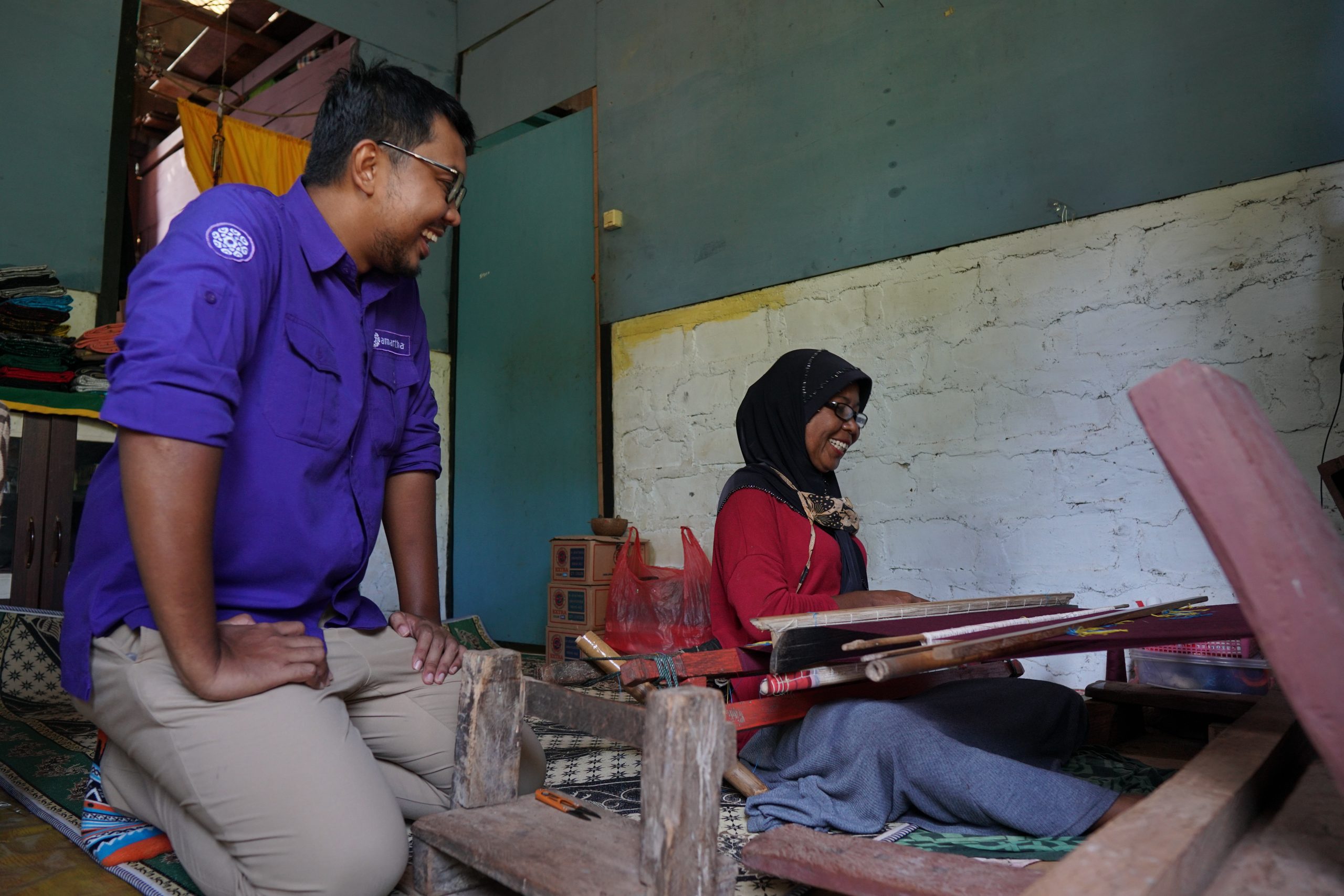

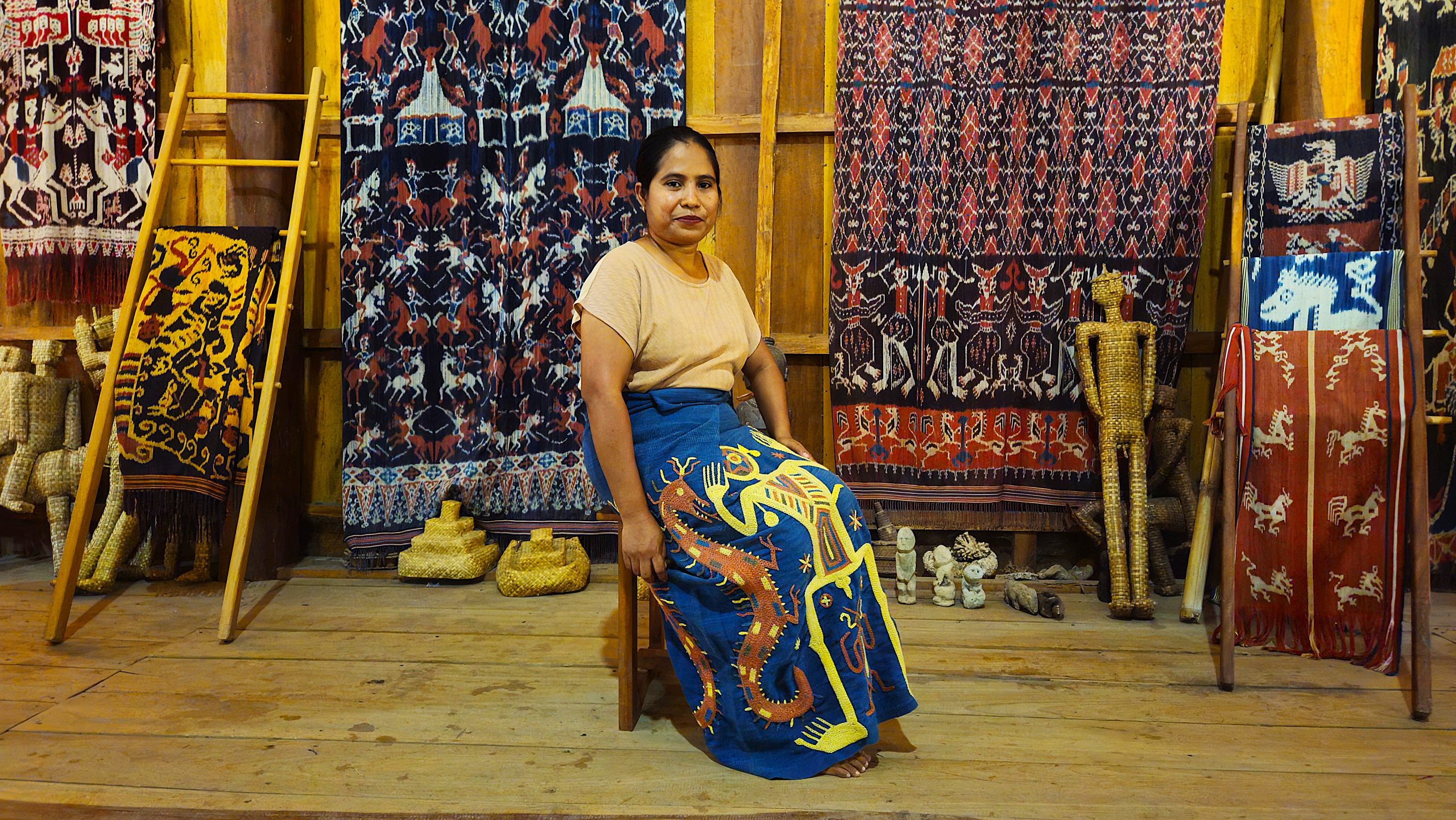
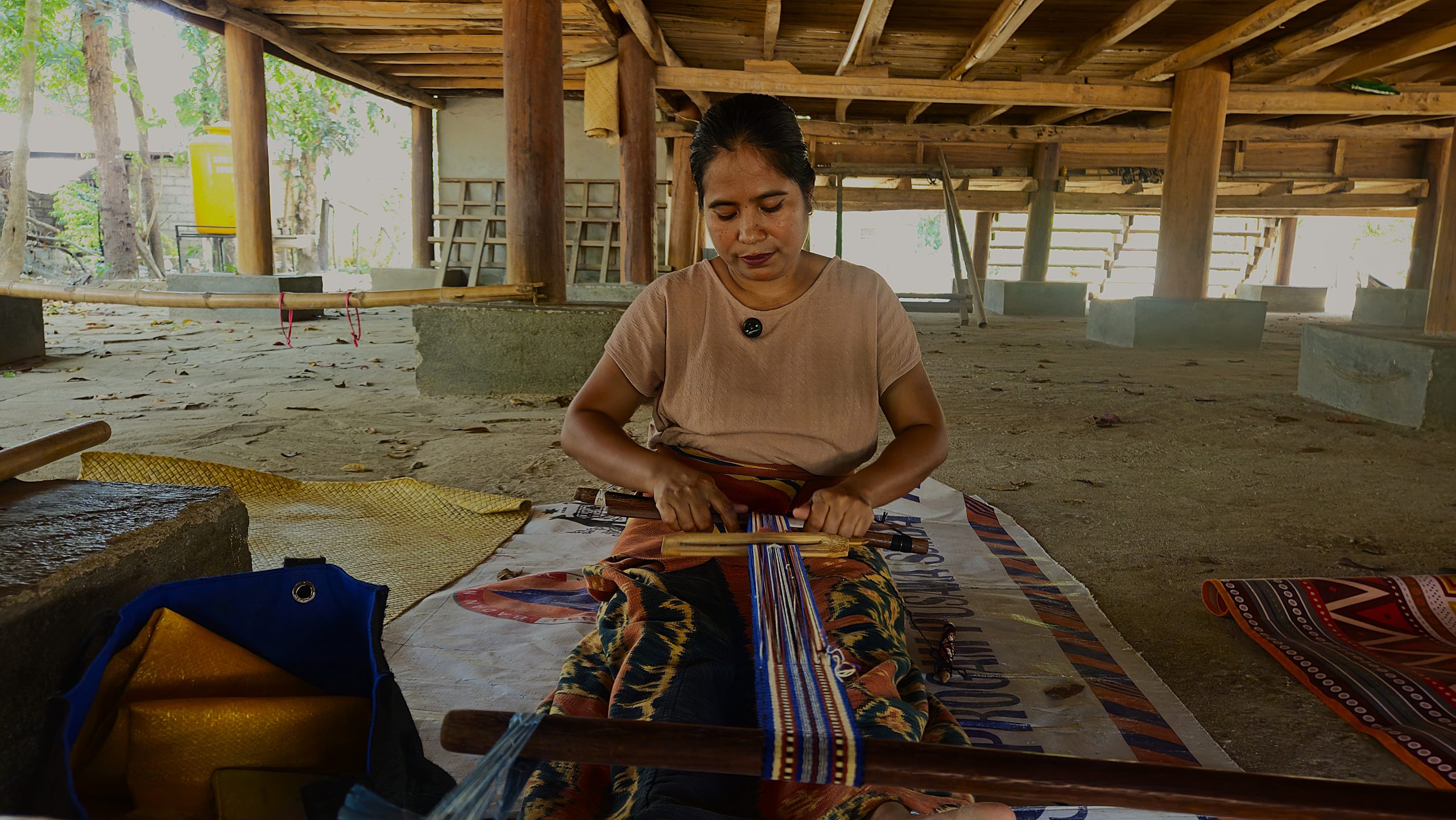
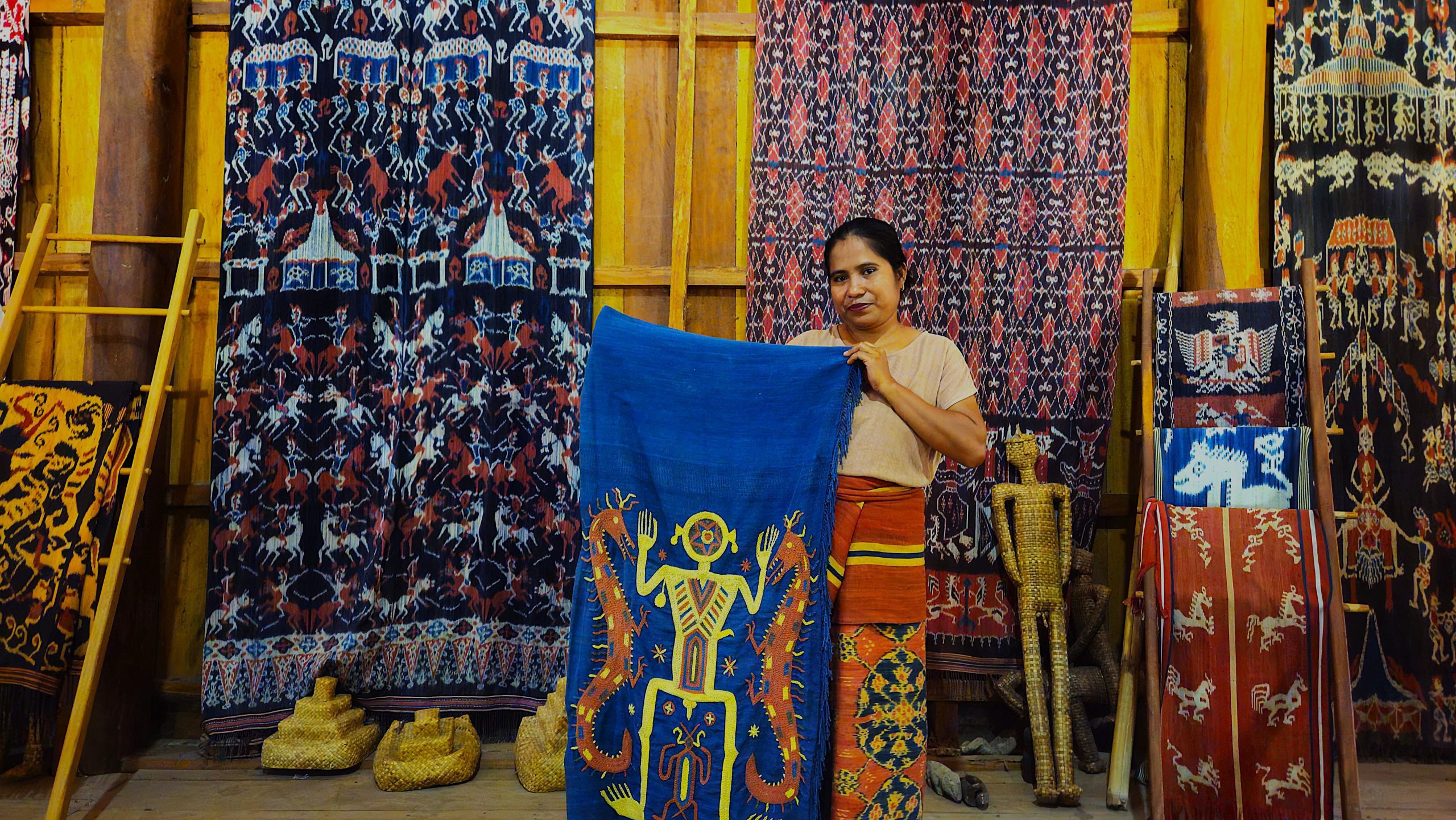
Five years ago, Pebrianti Ngguna Pandaung – fondly known in the community Mama Anti –never imagined that the threads she now weaves would help rebuild her life.
Before discovering her craft, the 35-year-old mother of four eked out a living as a scavenger among the hills of Tanah Merah, near Waingapu in East Sumba.
“My children and I once went two days without food,” recalls the divorcee.
“I was too embarrassed to beg, so I joined a friend collecting cans and scrap wires. With that money, I bought yarn and started learning how to weave.”
At first, she practised in secret at out of her aunt’s workspace, a dedicated space for weaving that her aunt had carved out for herself at her house.
“Sometimes I would sneak in to try her work. If I ruined the weaving yarn, she’d scold me—but that’s how I learnt,” the gutsy woman says with a small laugh.
Woven dreams
From a single roll of yarn, Mama Anti has grown her craft into a small enterprise making keychains, scarves and hand-woven songket fabrics coloured with natural dyes. Orders now flow in not only from Sumba, but also from Jakarta and Malaysia.
Her steady persistence has paid off: since 2020, her earnings have allowed her to provide for her family, send her children to school, and even purchase a motorbike.
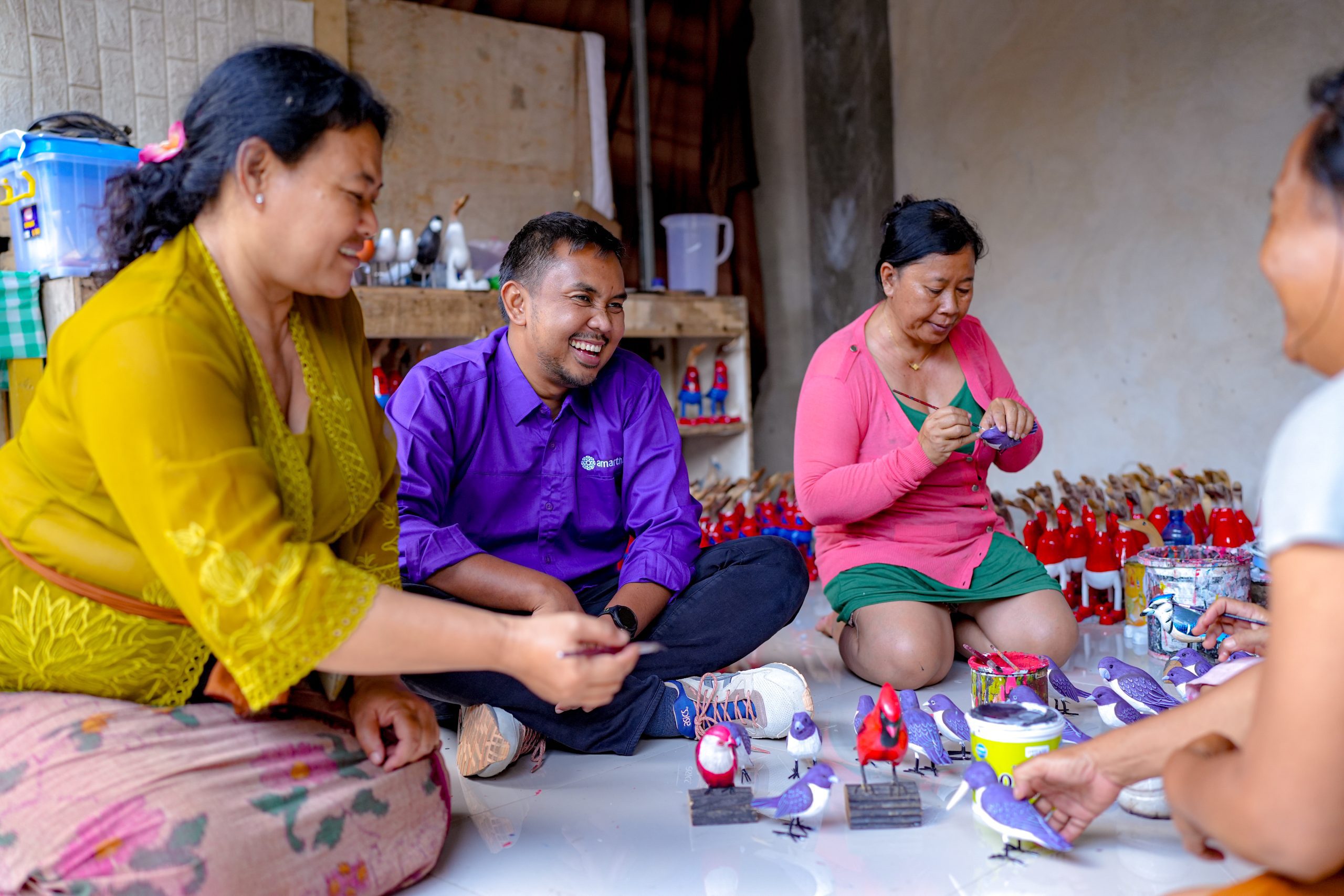
Central to her growth has been her membership in a women’s business group supported by Amartha Financial Group, a microfinance organisation offering loans without collateral.
In 2020, she received her first loan of IDR 5 million (US $315), repaid weekly over 50 weeks.
Alongside 31 other women entrepreneurs – 80 percent of them weavers – Mama Anti has come to treasure their solidarity.
“If someone struggles to make a payment, we help one another. We call it tanggung renteng,” she explains.
Tanggung renteng, as the practice is known in Indonesia is an informal, community-based repayment system where group members share responsibility for each other’s loans.
When one member struggles to meet a repayment, others in the group temporarily cover it under the tanggung renteng system. The member who receives help is trusted to repay the amount later once her situation improves.
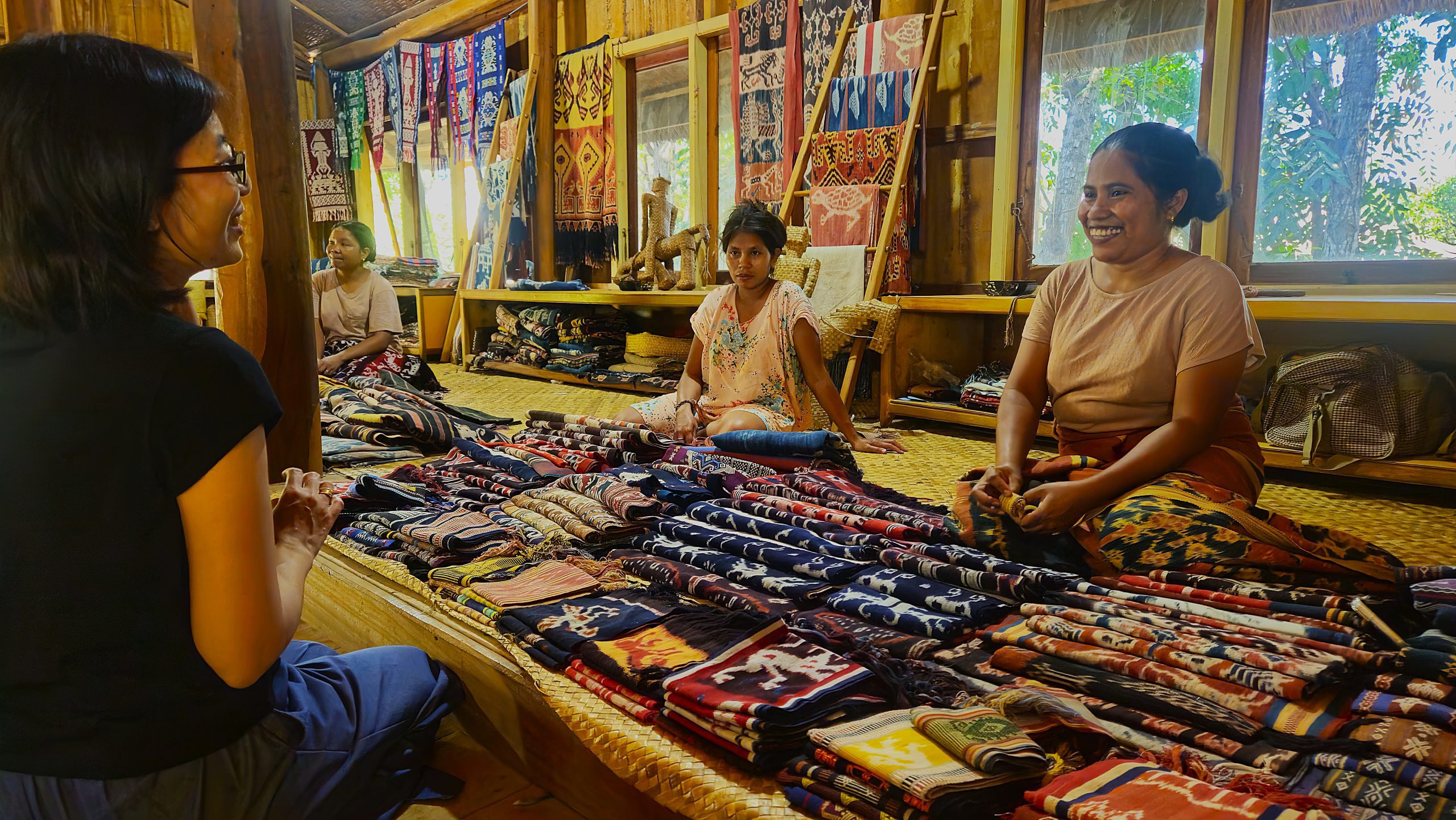
After repaying her first and second loans of IDR 5 million and IDR 7 million (US $445) from Amartha, Mama Anti is now repaying a third, worth IDR 9 million (US$570).
“The key is not to be lazy,” she says firmly.
Although Mama Anti continues to take loans from Amartha, they function as working capital rather than survival debt. Her weaving income has already allowed her to support her family, educate her children, and build assets such as a motorbike.
The loans enable her to scale production and meet growing demand, while the group-based tanggung renteng system provides temporary mutual support without absolving borrowers of their responsibility to repay.
Her dream remains simple: to open an art shop showcasing traditional hand-woven textiles made.
“We refuse to use machines because they reduce the quality of the fabric. We want hand-weaving to survive,” she says.
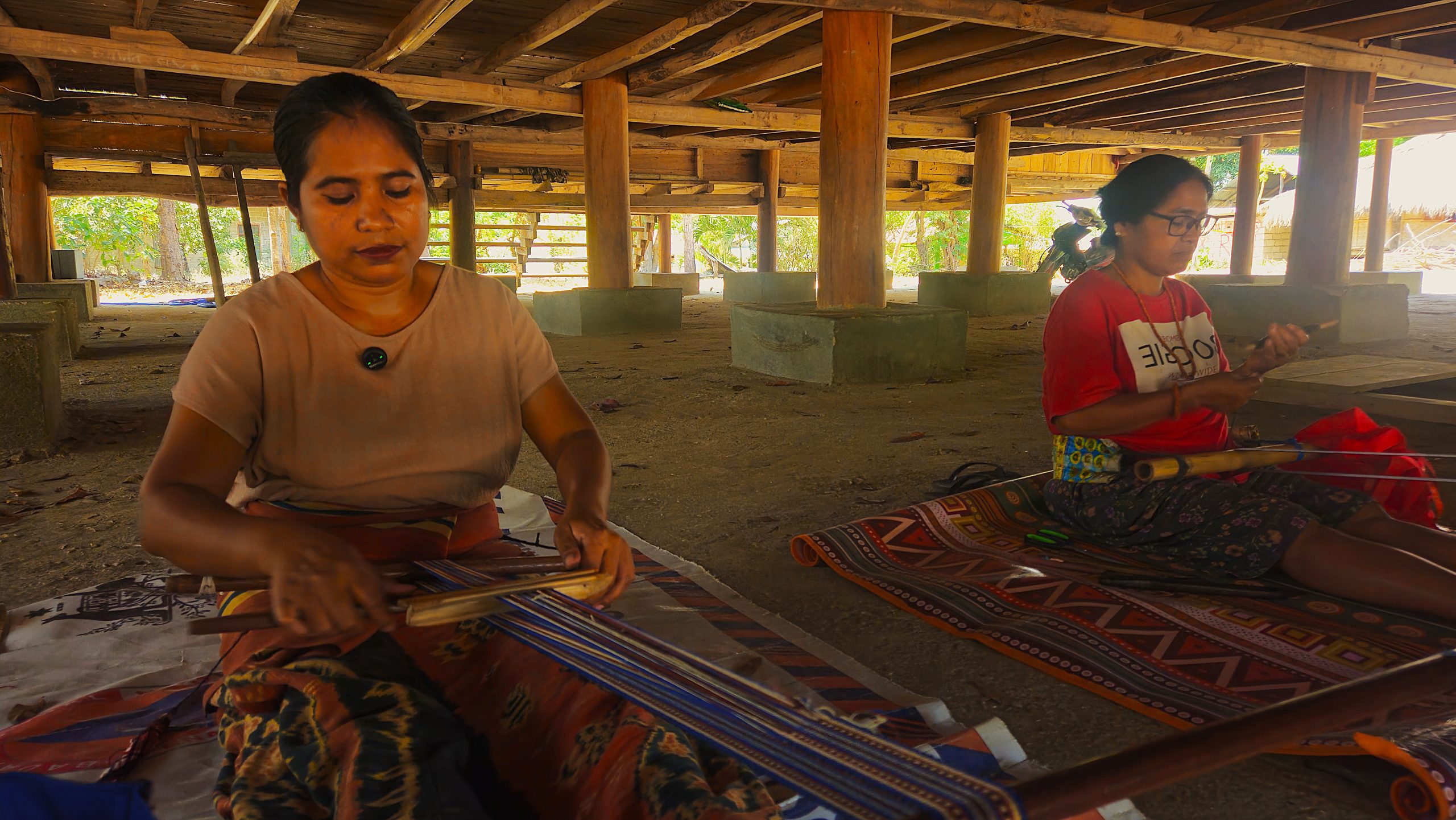
Behind those vibrant threads lies a story of perseverance, solidarity and women’s empowerment in Sumba.
“I feel proud,” she concludes softly, the weight of her journey evident in her quiet smile.
Tides of determination
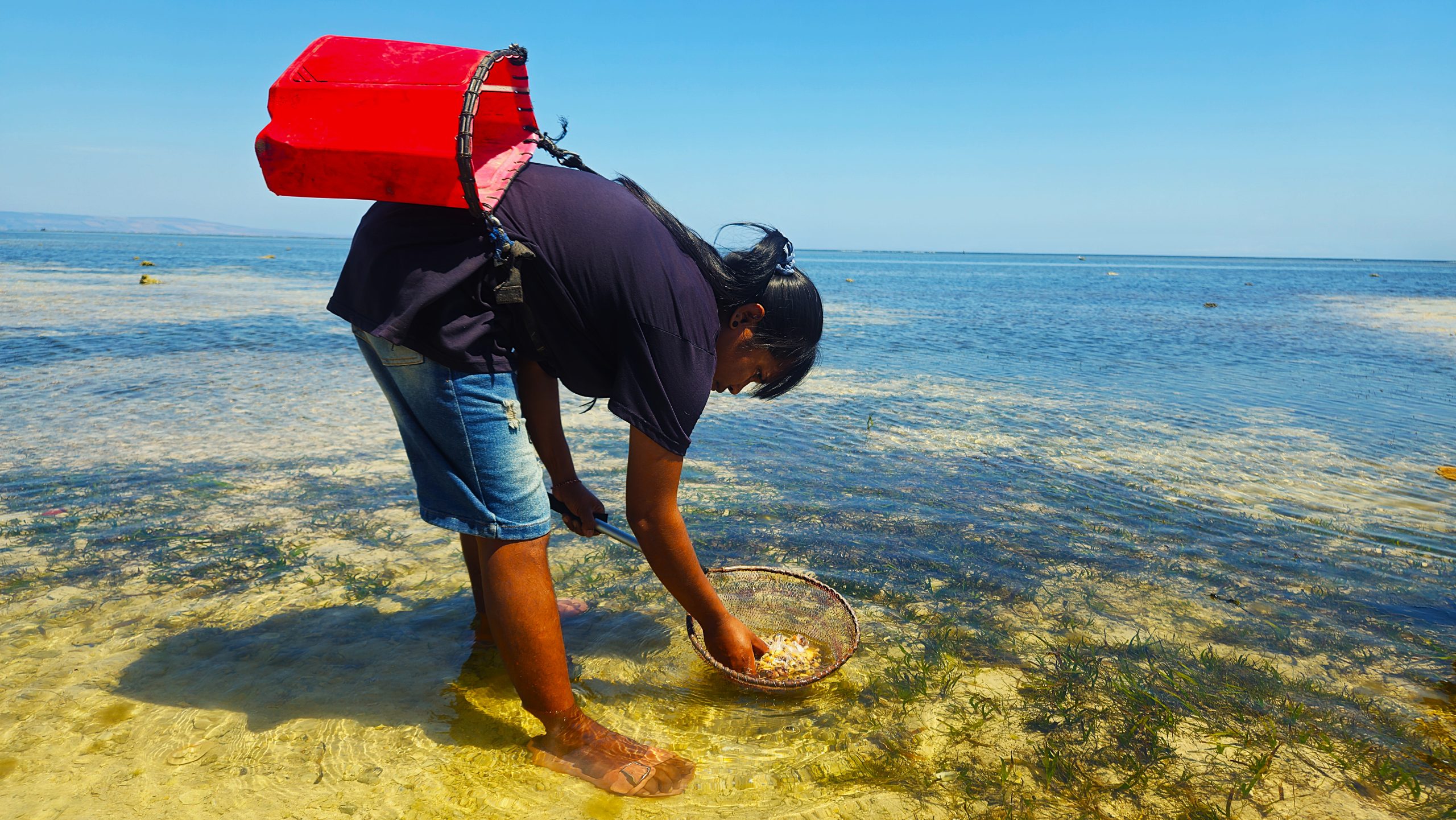
About 45 minutes east of Waingapu, another Sumbanese woman braves the tides for a living.
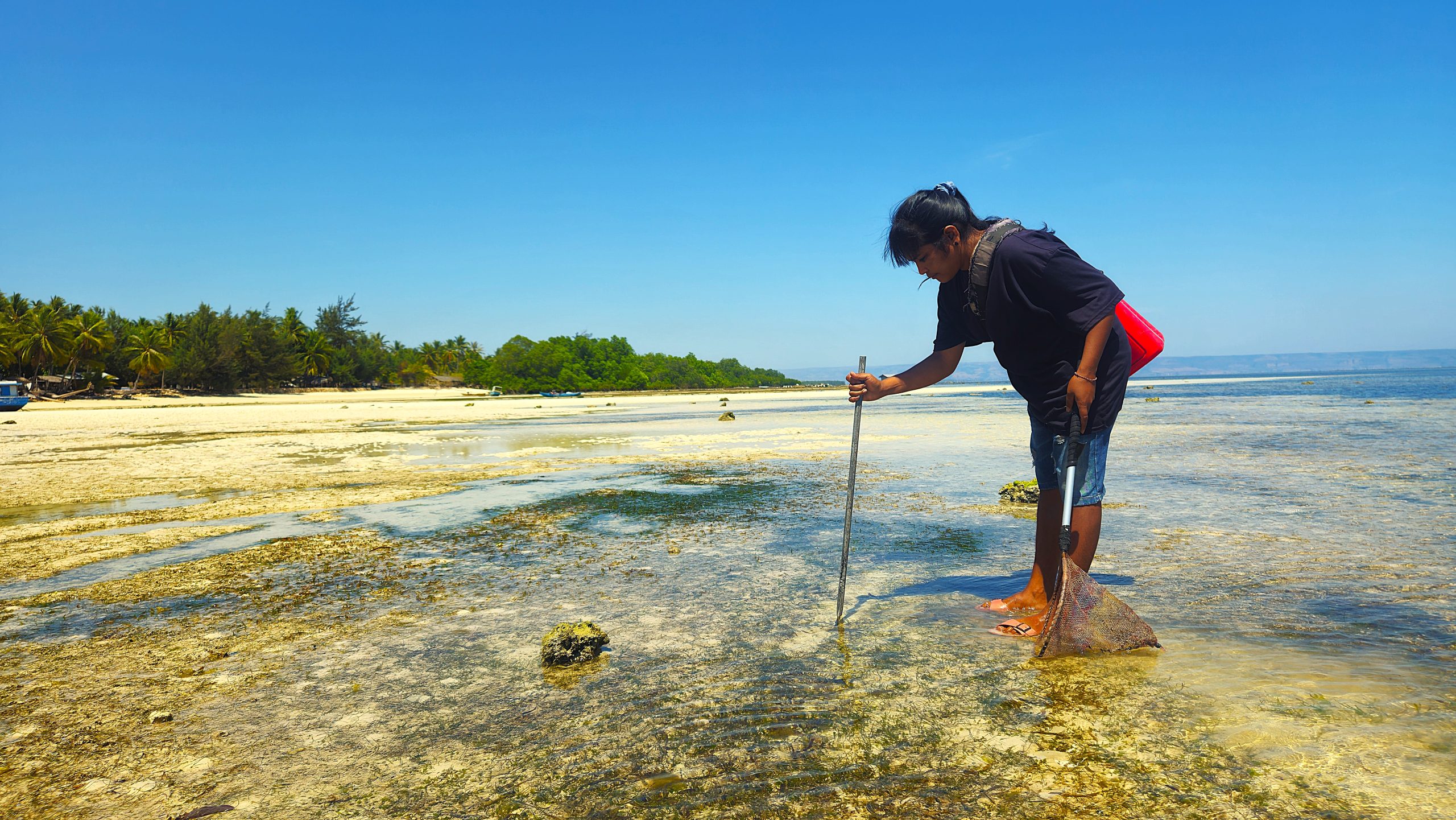
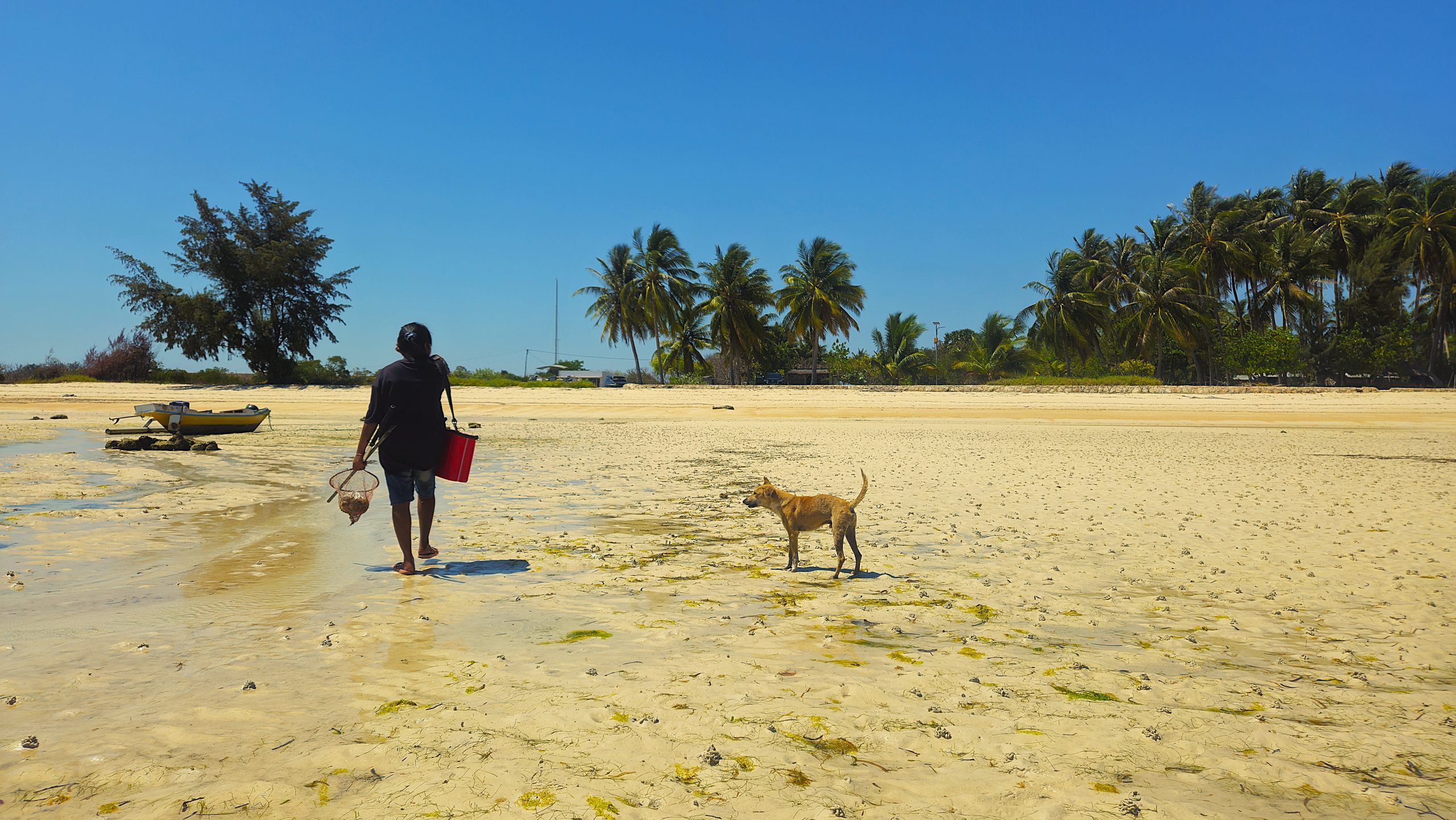
Whenever the tide recedes at Walakiri Beach, Katredha Lodo, 32, affectionately called Mama Redha, scours the shoreline, a small bucket in hand, gathering shellfish and fish to sell.
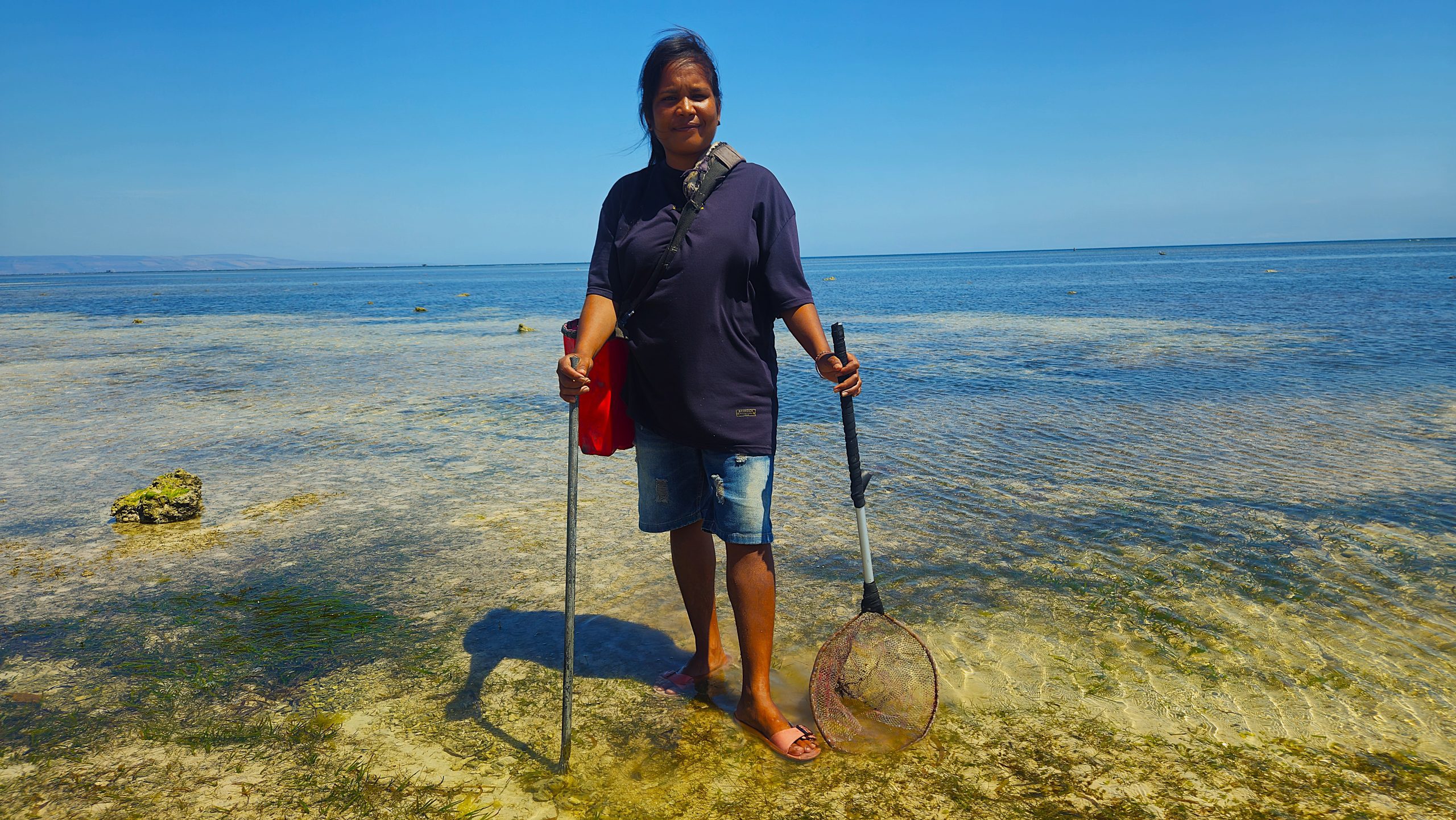
“Anything I can turn into money,” she says with a smile.
For years, the sea has been both her livelihood and her lifeline.
She has done this for 15 years. But these days, Mama Redha’s work no longer stops at the shoreline.
Today, she has harnessed the power of social media to expand her reach, using Facebook, WhatsApp and TikTok to sell her catch online.
“I take photos before packing them into the freezer, then post them. When someone orders, I deliver it myself – cash on delivery,” she says.
The sea provides enough to support her family: “It’s not just enough. It’s more than enough.”
Part of her earnings goes towards customary obligations such as clan rituals, wedding ceremonies, or funeral. While she is still single and has no children, she chips in to pay her nephew’s school fees.
From her modest savings, she has opened a small stall near the beach selling seafood, drinks, and basic refreshments, popular with visitors in the late afternoons and on weekends.
Her initial capital came from Amartha – and the microloan platform’s trust-based lending model made all the difference for Mama Redha. Unlike traditional banks that demand collateral – something few women in rural Sumba could ever provide – Amartha offered loans built on community trust and accountability.
“Banks need guarantees, but Amartha doesn’t. Our only guarantee is showing up for the group meetings,” she explains.
Amartha believed in her and this belief changed everything.
Now over halfway through repaying a loan of IDR 5 million (US$315), she uses the funds to maintain her stall, stock inventory, and run a freezer for her seafood business.
“When you dare to borrow, you must also dare to take responsibility,” she says.
Although her stall continues to grow, the sea remains her lifeline.
“In terms of income, I still earn more from the sea. But the stall balances it out,” she says pragmatically.
She dreams of a brighter future.
As she places a handful of shellfish into the freezer, she says: “I just want to move forward, not like before. From a hut to a real home. What matters is to keep trying.”
A taste of independence
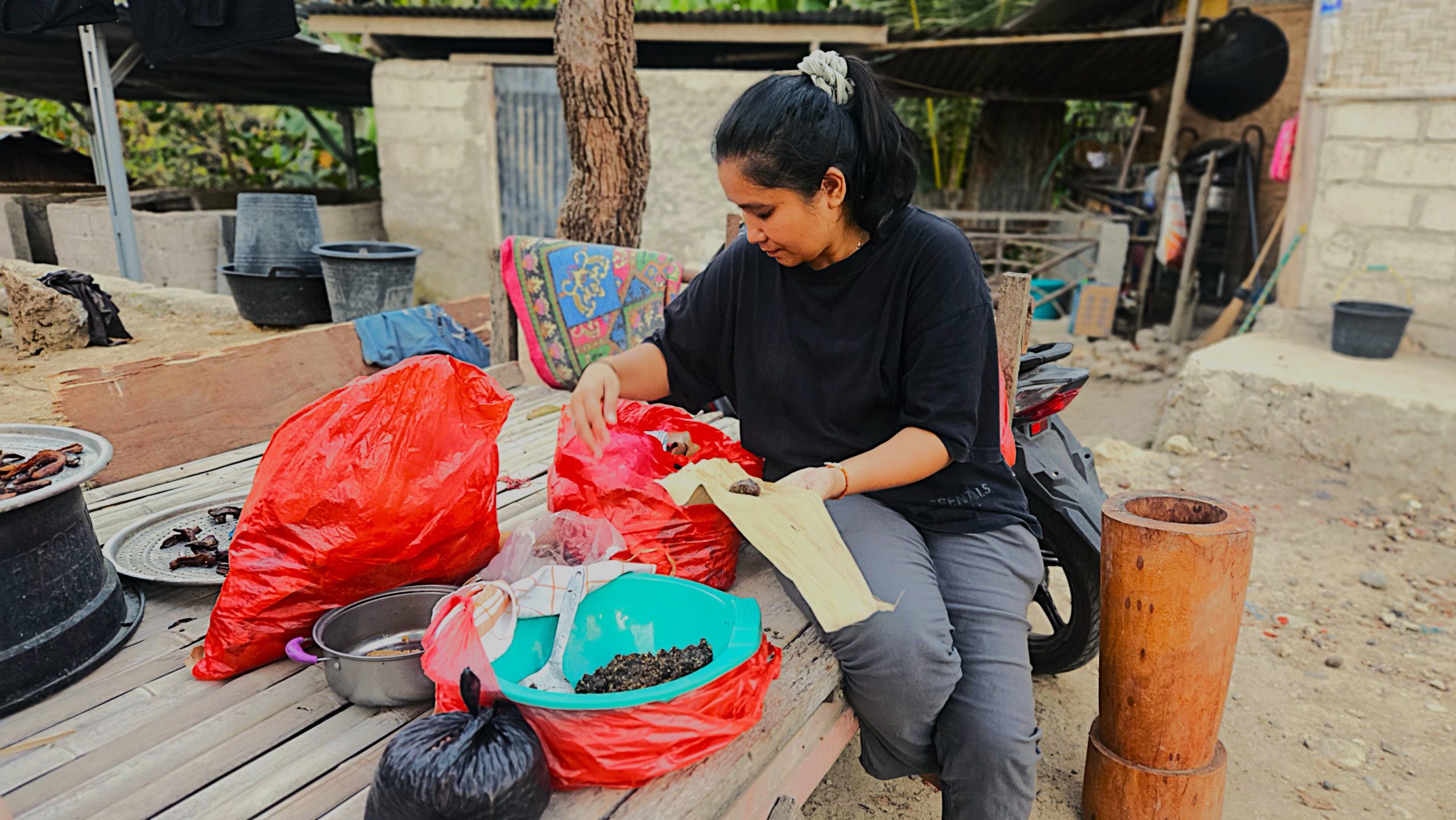
Amid the flood of modern snacks and instant foods, Marlita Anggun Sari stands firm, holding on to her ancestral culinary legacy: manggulu.
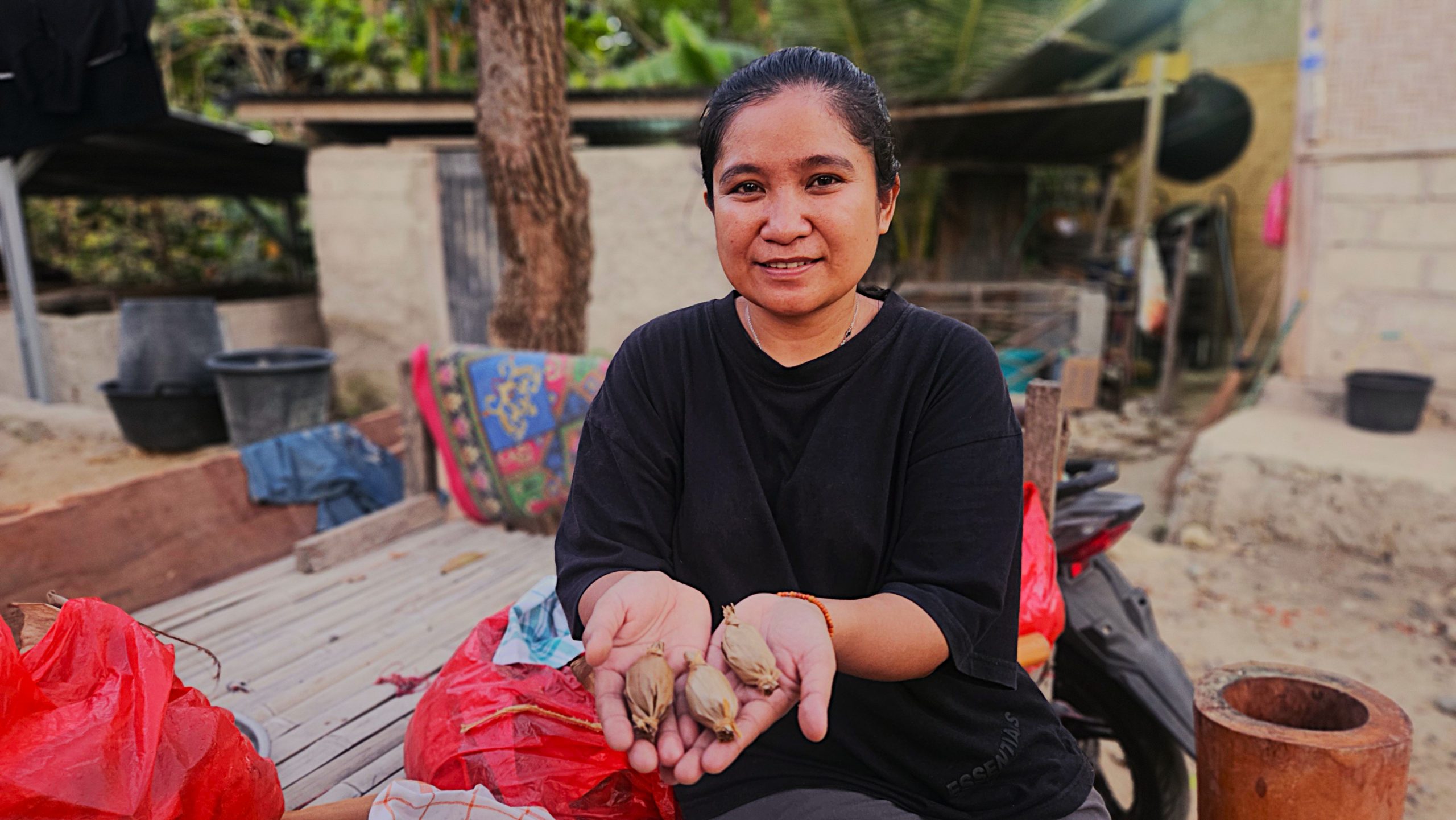
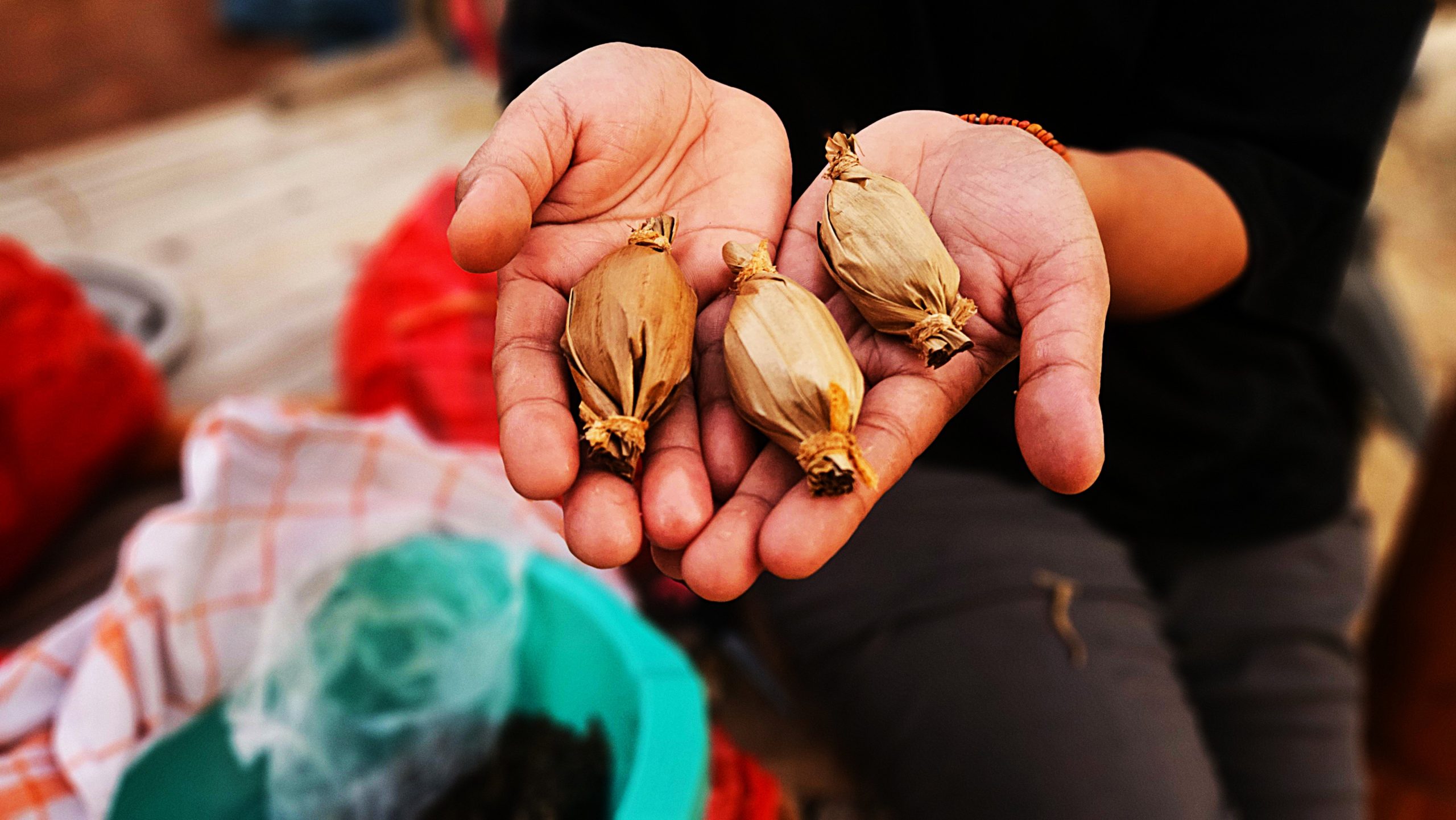
This traditional delicacy from Sumba is made from ripe bananas that are sun-dried, blended with roasted peanuts, and ground into a dense, golden-brown dough. The mixture is then wrapped in lontar palm leaves and left to dry again under the scorching sun until it reaches its distinctive texture and aroma.
“Manggulu is a food that keeps hunger away,” Marlita, 32, explains. “People usually eat it before lunch or while having coffee.”
Once a staple for farmers and fishermen who spent long hours in the fields or at sea, manggulu is sweet, nutty, and energising. But it’s now becoming rare.
The ingredients must come from local bananas, and the slow, labour-intensive process has made it difficult to compete with factory-made snacks.
In 2023, with a modest IDR 5 million (US $315) microloan from Amartha, Marlita began purchasing raw materials to produce manggulu alongside handwoven fabrics. A year later, she took an additional loan to expand her line of woven scarves and keychains.
The capital also helped pay wages for three groups of women, nine in total, responsible for drying the bananas, roasting them, and wrapping the finished product in palm leaves. Every day Marlita oversees production, from drying to packaging
“Each pack contains four pieces and sells for ten thousand rupiah,” Marlita explains. She Marlita, who learned how to make manggulu from her grandmother, has seen demand grow steadily – not just from locals but also from tourists seeking an authentic Sumbanese souvenir.
“My motivation is to meet the demand from visitors while preserving our local heritage,” she says. Finding reliable help remains a challenge.
“Sometimes I have to pay upfront to encourage the women to join me,” Marlita admits.
Her earnings now allow her to save and dream of owning her own home.
“I’m proud of what I’ve achieved. It makes me happy,” she says with a smile.
Through Marlita’s hands, Manggulu becomes more than just a snack.
It is a symbol of resilience, identity, and the quiet strength of Sumbanese women keeping their heritage alive amid changing times.
Banking on empowerment
In 2010, Andi Taufan Garuda Putra set out to change how finance could work for Indonesia’s most underserved communities.
Then a young entrepreneur from Bogor, he was inspired by Nobel laureate Muhammad Yunus and the success of Bangladesh’s Grameen Bank, which had empowered millions of rural women through microloans.
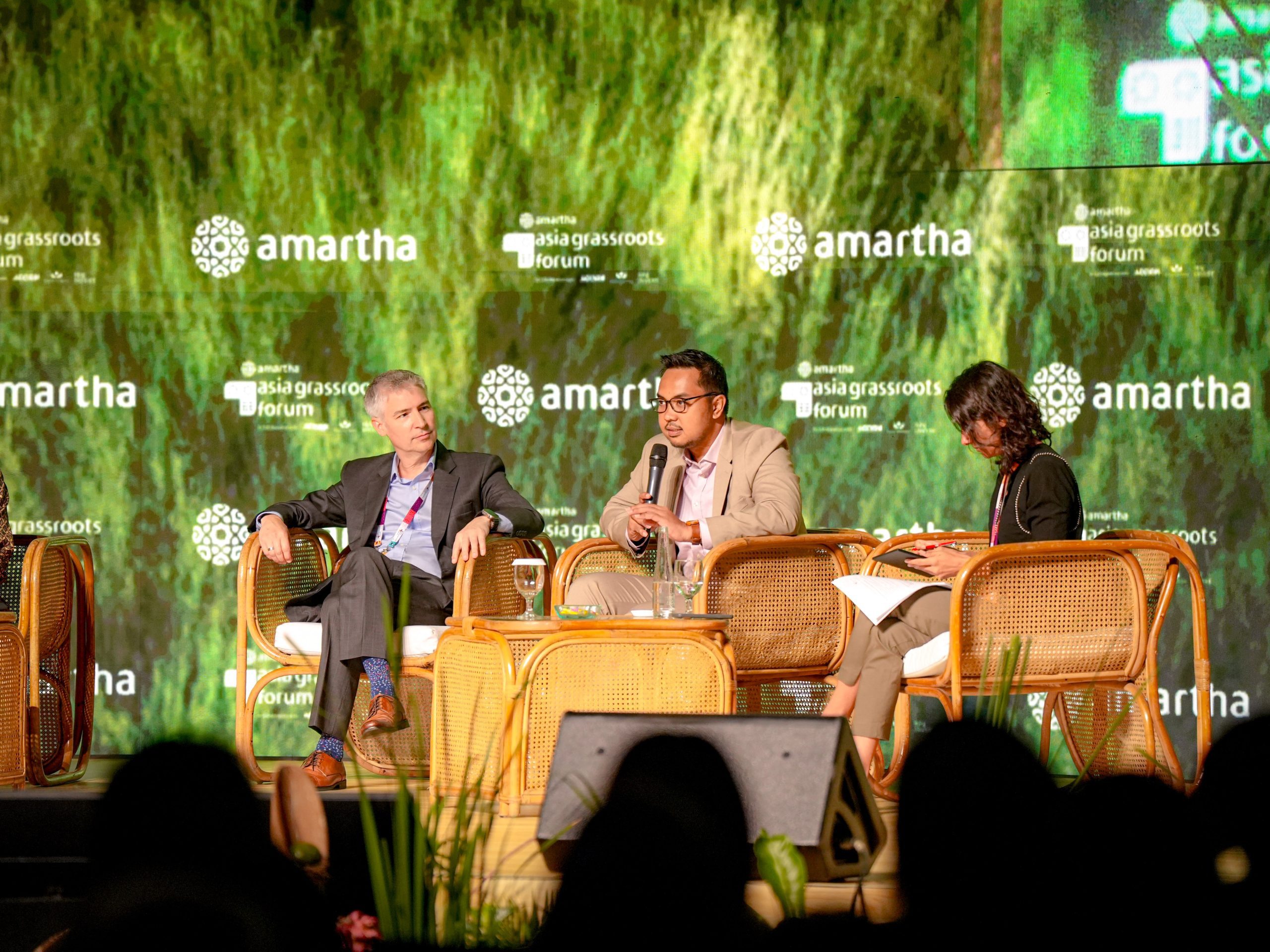
“The Grameen Bank model was highly successful in reaching unbanked rural women and enabling them to create micro-business that gave them dignity and independence,” Taufan says.
He began in Ciseeng, Bogor, offering small loans of IDR 500,000 (US $31.50) to women who had been excluded from traditional banking systems.
Most had no collateral, formal income records, or prior experience running a business. The only condition he gave was that they form groups – learning, supporting, and holding each other accountable along the way.
Those early loans became stepping stones for transformation.
Many women used the capital to start food stalls, weaving cooperatives, or small trading businesses.
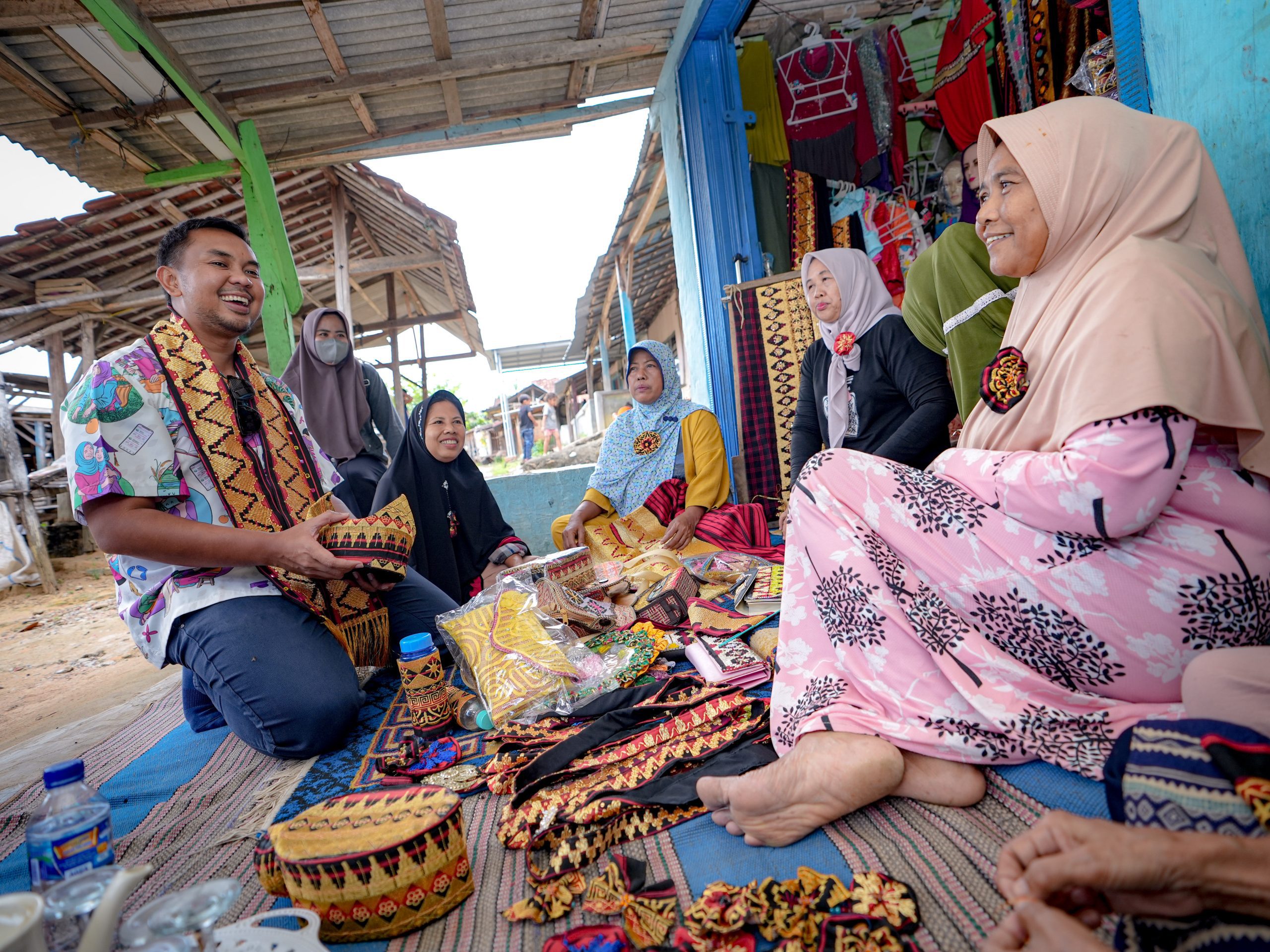
With each repayment, Taufan saw how financial inclusion could change not just livelihoods, but confidence and community.
These small loans transformed lives, helping women expand their businesses, send their children to school, and even acquire livestock or improve their homes.
“These experiences strengthened my belief that equitable prosperity begins with extending financial access to the grassroots. Those at the base of economic pyramid, most of whom live in rural areas,” Taufan reflects.
Fifteen years on, his vision and his modest microfinance initiative in the outskirts of Bogor has grown into the impressive Amartha Financial Group we see today, a digital-first financial ecosystem reaching over 3.3 million women-led micro, small and medium entreprises (MSMEs) across 50,000 villages in Java, Sumatra, Kalimantan, Sulawesi, Bali, and Nusa Tenggara.
At its core, Amartha continues to uphold the same belief that inspired its founding: that prosperity must be inclusive, and that women, especially in rural areas, are central to building it.
At the heart of Amartha’s story lies a simple yet profound vision: that prosperity should be inclusive, and that women—especially in rural areas—are key to unlocking it.
“Since its founding in 2010, Amartha’s core mission has remained the same, namely to empower the rural grassroots to achieve sustainable prosperity,” Taufan says.
Digital meet human touch
In a nation of more than 17,000 islands, technology is a necessity.
For Amartha, scaling financial access across Indonesia’s vast geography meant embracing a digital-first model without losing the human connection that built its foundation.
What began as a manual, community-based approach has evolved into a hybrid ecosystem, powered by technology and grounded in trust.
“Our hybrid model combines digital innovation with more than 9,000 field agents who are embedded in local communities,” Taufan says.
Today, Amartha’s network includes a vast network of field agents, known locally as mitra usaha, who serve as educators, mentors, and community liaisons. Even in remote villages with limited connectivity, they ensure that women entrepreneurs can participate in the digital economy and access essential services.
As Amartha continues to grow, maintaining quality and integrity has become ever more critical.
Advanced technology underpins the company’s governance and operations – but empathy and human connection remain its true compass.
“Technology helps us scale, but human judgment, and empathy, is critical to making sure that we’re truly serving the needs of our users,” says Taufan.
Women first, prosperity follows
Financial access is just one part of the equation. Many rural women still lack digital literacy.
This is a barrier Amartha addresses directly.
Some of the women in Indonesia’s rural heartlands, he noted, don’t even own their phone. They share them with family members.
So Taufan wanted to ensure Amartha’s programmes go beyond microloans. Women had to be equipped with tools and knowledge to help them build sustainable livelihoods.
“Digital and financial education is an important part of what we do,” Taufan says.
“Our agents help them learn how to use our digital application, how to start investing, and how to make digital payments,” Taufan notes.
To bridge the gap, Amartha integrates digital and financial literacy training into its model. Field agents – many of them women themselves – teach clients how to navigate digital platforms, manage savings, and make online payments.
“Digital and financial education is an important part of what we do,” Taufan says.
“Our agents help them learn how to use our digital application, how to start investing, and how to make digital payments,” Taufan notes.
These lessons often mark a profound shift. In households where men have traditionally been the sole breadwinners, women now play a transformative role: earning, managing, and multiplying family income.
“By empowering them to earn their own money and use digital technology, their horizons expand,” Taufan adds.
Andi Taufan believes that empowering women not only uplifts families but strengthens entire communities.
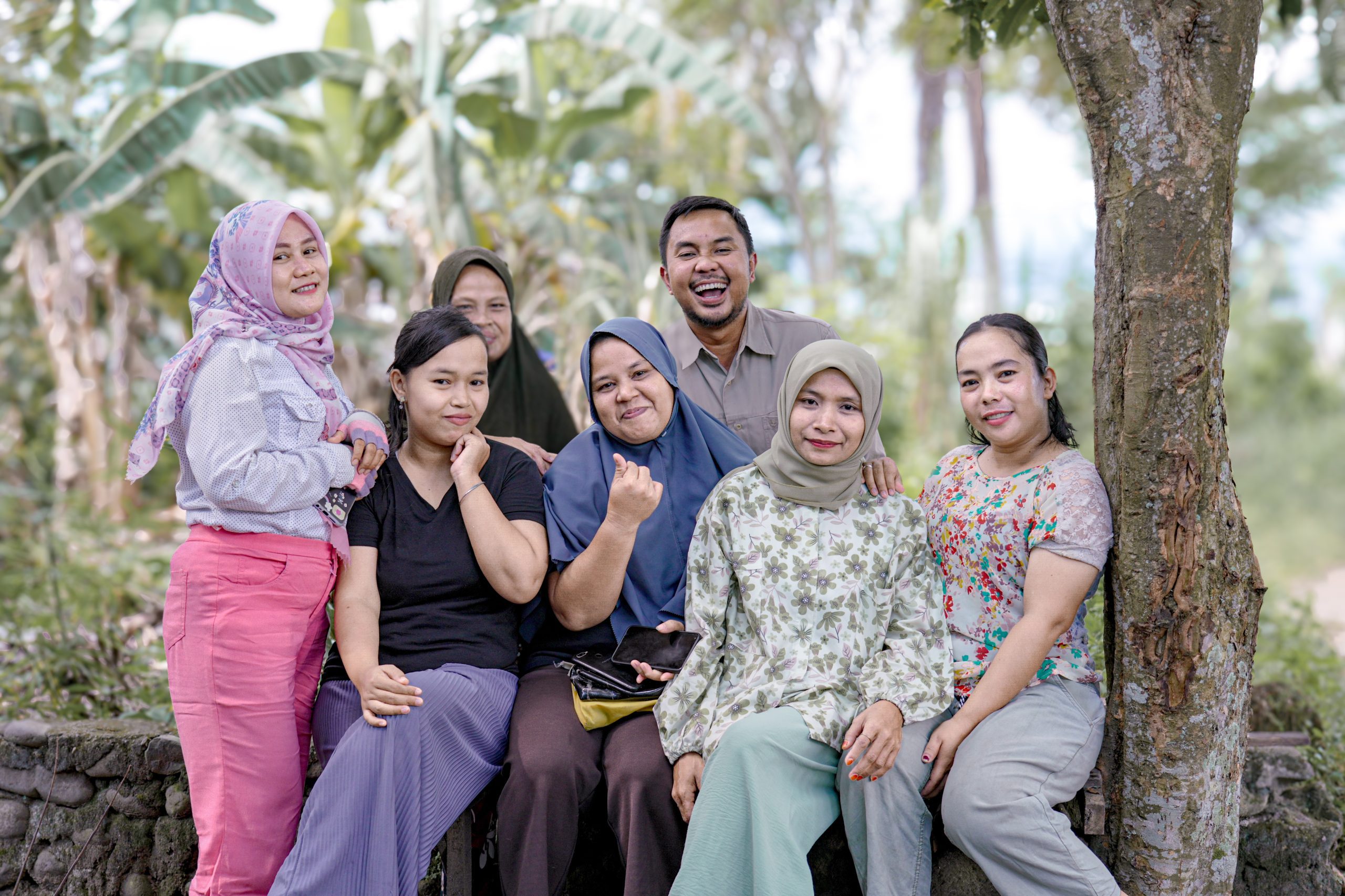
“Women also tend to be more disciplined in managing household finances. Empowered women nurture resilient, high-quality generations,” he says.
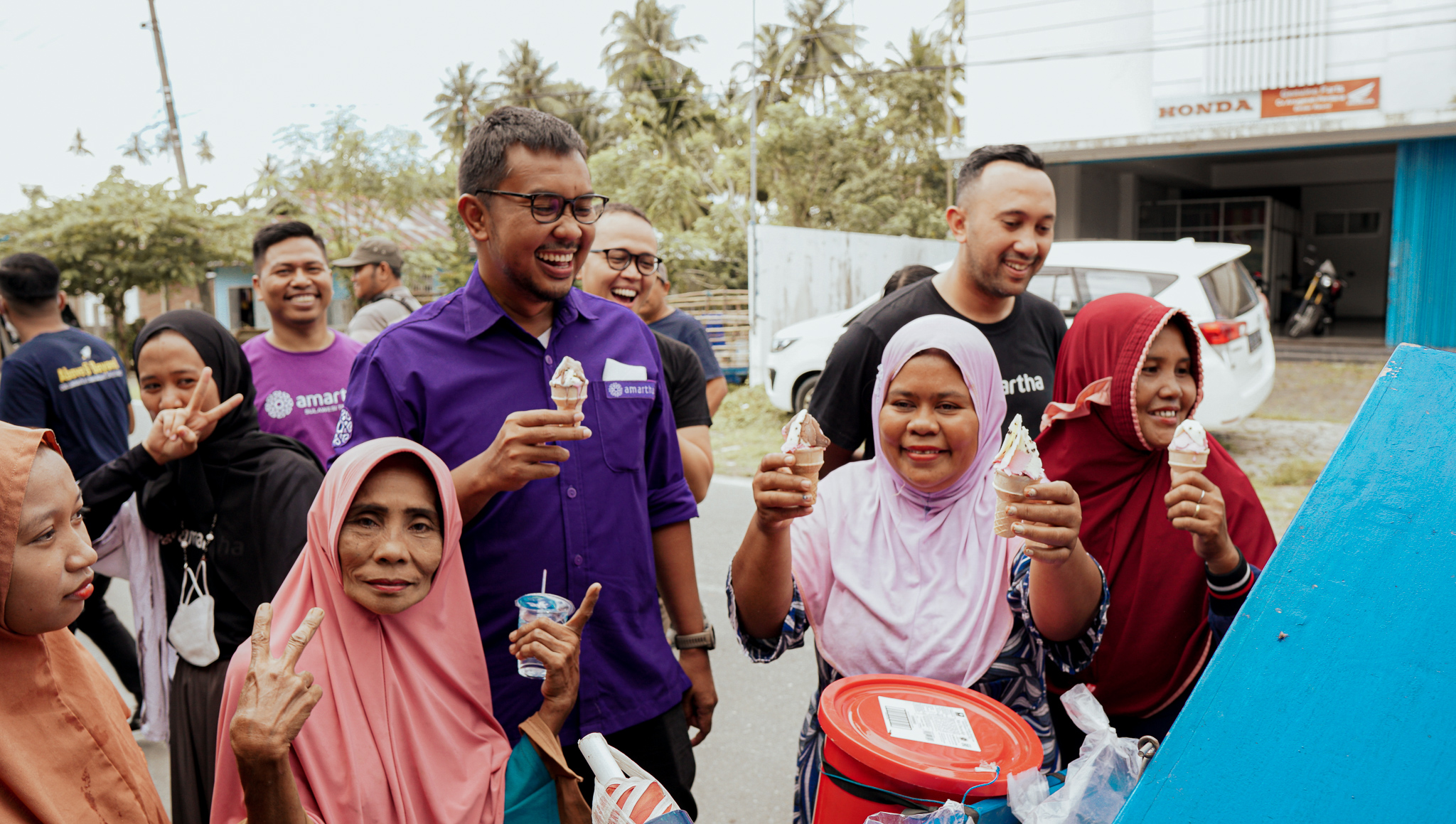
Today, about 99 per cent of Amartha’s borrowers are women, each running micro or ultra-micro enterprises in villages across Indonesia.
What binds them together is a shared belief: that economic independence begins with trust, and that prosperity, when built from the grassroots up, can be both equitable and enduring.
Trust that pays
Amartha’s successful loan repayment rate comes in at an impressive 97 percent.
At the core of Amartha’s low default rates lies a key principle: community.
While technology powers efficiency and scale, Amartha’s real strength comes from tanggung renteng – a community-based system of joint responsibility that turns social bonds into financial reliability.
In Indonesia’s highly communal village communities, these social ties and obligations are incredibly strong, and serve both to ensure repayment and to provide ready-made support.
“Instead of relaying on collateral, we ask the women borrowers to form groups whereby they agree to collectively guarantee each other’s loans. It’s important to note that we don’t select the members; they decide who should join the group,” Taufan says.
“Once they’ve formed groups, they do their best to uphold their commitments to each other.”
The result is a self-sustaining cycle of trust.
When one member struggles, the group steps in, offering support, advice, or temporary assistance. Repayment becomes not a burden, but a shared responsibility.
In places where formal institutions are scarce, tanggung renteng works because it’s built on something far more powerful than paperwork: community honour.
While these human networks form the heart of Amartha’s approach, technology reinforces it.
The company’s AI-enabled credit scoring system, developed over fifteen years of community-level data, helps assess borrowers’ creditworthiness with precision.
Field agents on the ground add a vital human layer of verification, ensuring every decision reflects both data and context.
The result is a self-sustaining cycle of trust.
When one member struggles, the group steps in, offering support, advice, or temporary assistance. Repayment becomes not a burden, but a shared responsibility.
In places where formal institutions are scarce, tanggung renteng works because it’s built on something far more powerful than paperwork: community honour.
While these human networks form the heart of Amartha’s approach, technology reinforces it.
The company’s AI-enabled credit scoring system, developed over fifteen years of community-level data, helps assess borrowers’ creditworthiness with precision.
Field agents on the ground add a vital human layer of verification, ensuring every decision reflects both data and context.
Dreams at the base
Despite growing international attention, Taufan’s focus remains close to home.
While expansion isn’t off the table, for now the company remains focusing on addressing the needs Indonesian MSMEs, particularly women-led businesses in rural areas.
Taufan believes there’s still much untapped potential in Indonesia, and more work to be done. Across the archipelago, from Java to Nusa Tenggara, countless communities remain underserved.
After fifteen years, his ambition remains deeply personal.
“My dream is that Amartha can act as a change agent, helping catalyse the potential of the rural economy in Indonesia,” Taufan says.
He recognises the enormous gap in access to productive working capital at the grassroots – a gap few financial institutions are willing or able to fill, due to both geography and perceived risk.
Amartha’s solution is carefully calibrated: digital financial products, community-based group support, and strategic partnerships that create an ecosystem built for the realities of rural life.
It’s a model designed to give women entrepreneurs the tools to grow their businesses, support their families, and spark broader economic change.
The hope is that millions of individuals at the bottom of the economic pyramid can unleash their potential and dreams for a better future.
Taufan has spent 15 years dreaming of this, even when it didn’t seem possible.
He says: “I sometimes wanted to give up, but when I see these grassroots women preserving against all odds, how could I give up? Their generosity and resilience are our inspiration to go above and beyond.”